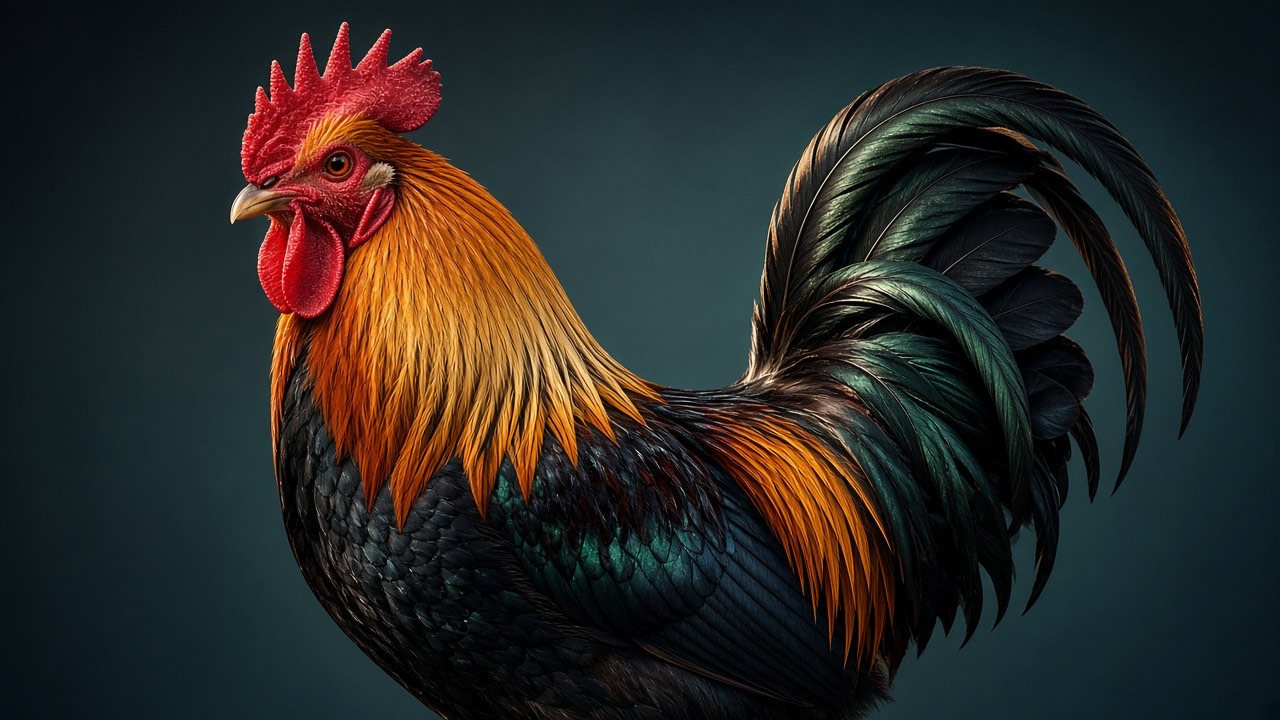
Close-up portrait of a rooster with a vivid red comb and iridescent green-black tail feathers

The bird you thought you knew

Chickens are far weirder than you think

They outnumber every other bird on the planet, they can recognise your face across a farmyard, and their closest famous relative is a Tyrannosaurus rex. Come for the facts, stay for the two games that made a hen crossing a road into a genuine skill sport.

Free to read, free to play. No sign-up, no downloads, no in-app purchases.

26 billion Living chickens, making them the most numerous bird on Earth
1.3 trillion Eggs laid worldwide every single year
3,500+ Years living alongside people, by the latest archaeology
500+ Recognised breeds, from palm-sized bantams to giants

Nine things that are actually true

The facts that ruin the phrase “bird brain”

Every claim below comes from published research on domestic fowl. None of it is folklore, and most of it is stranger than the folklore would have been.

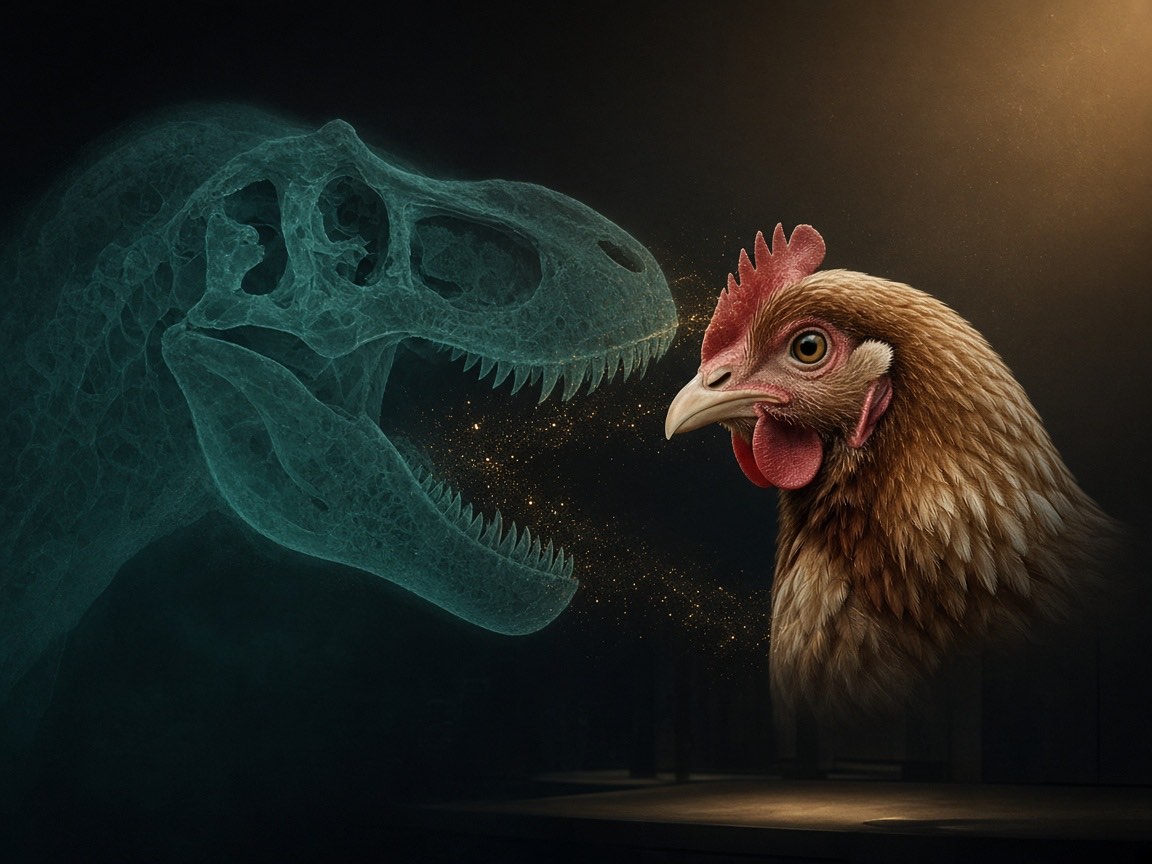
Glowing teal Tyrannosaurus rex skull facing a photorealistic hen's head in profile
Deep ancestry

Your dinner is a dinosaur's cousin

When researchers recovered collagen protein from a 68-million-year-old Tyrannosaurus rex femur, they compared it against living animals to find the closest match. It was the chicken. Birds are not merely dinosaur-adjacent, they are the surviving branch of the family.
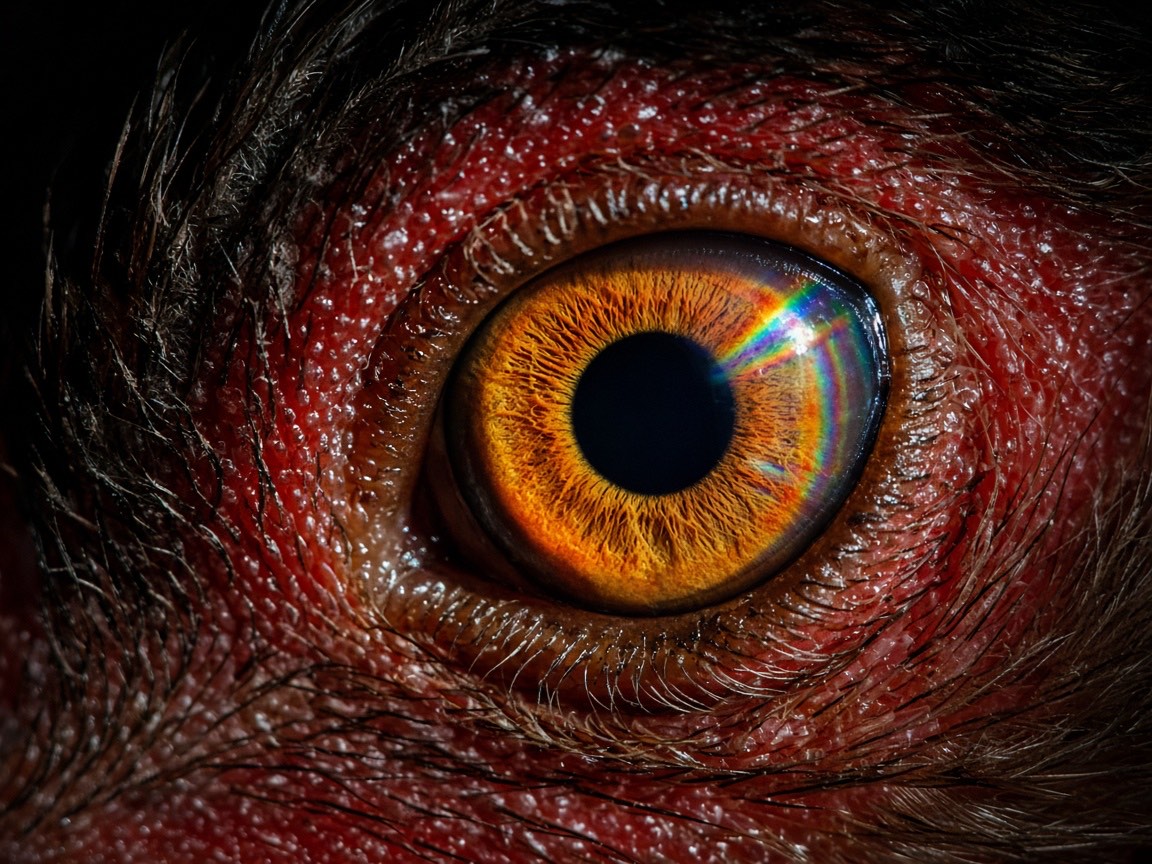
Extreme macro photograph of a chicken's amber eye with a rainbow light reflection
Super-vision

They see colours you will never see

Humans are trichromats with three cone types. Chickens are tetrachromats with four, plus double cones for motion detection and the ability to perceive ultraviolet. Their retinas are so efficiently arranged that physicists have studied them as a natural optimisation problem.

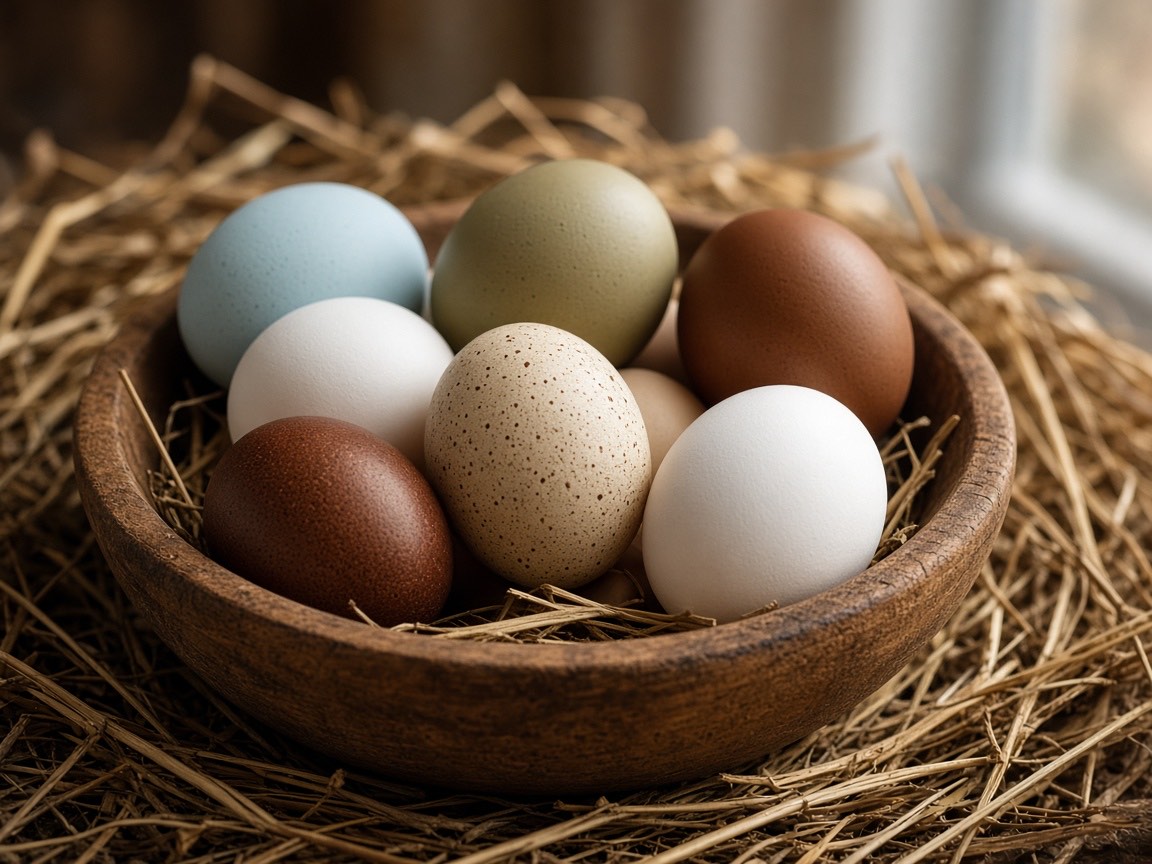
Blue, olive, brown, speckled and white chicken eggs in a rustic wooden bowl on straw
Eggs

Check the earlobes to predict the egg

Shell colour is not random and it is not related to nutrition. In most breeds it tracks the colour of the hen's earlobes: white lobes tend to mean white eggs, red lobes tend to mean brown. Araucanas break the mould entirely and lay eggs in pale blue.

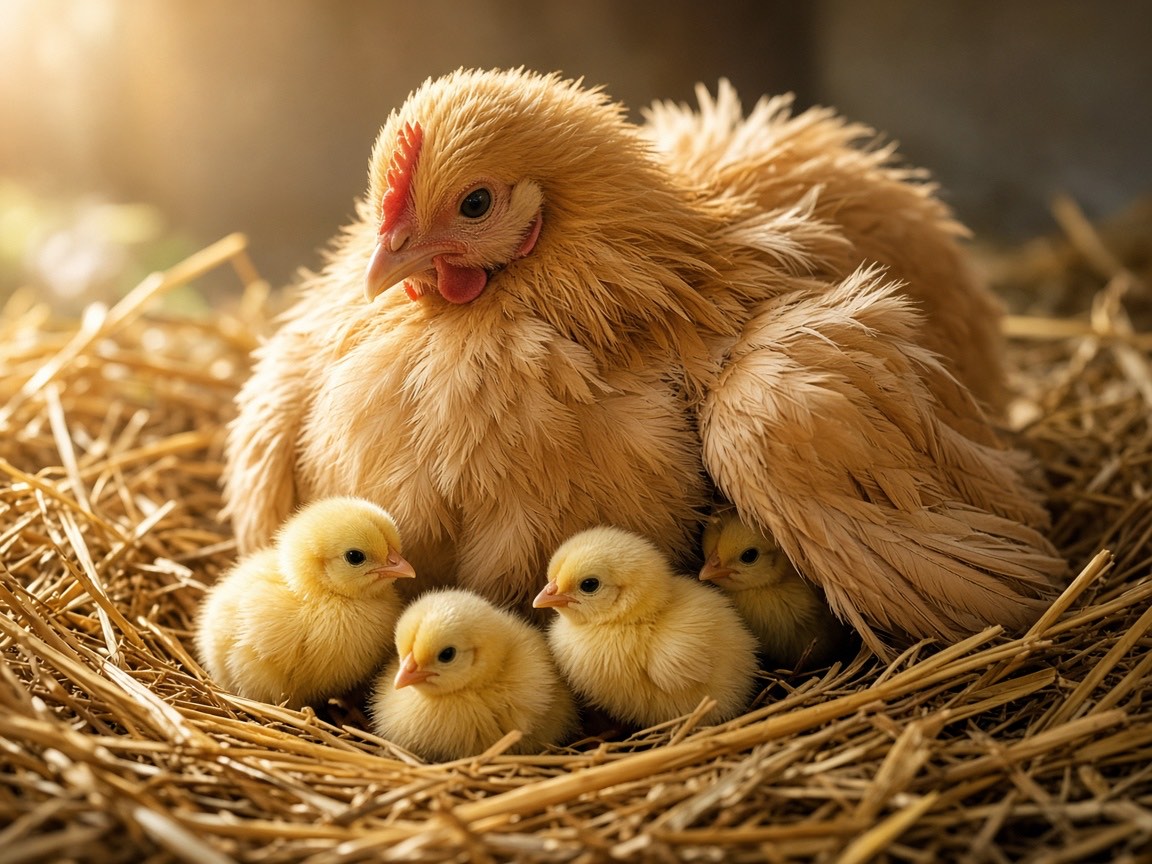
A fluffy mother hen in golden straw sheltering four newly hatched yellow chicks
Family life

Conversations begin before hatching

In the last day or two inside the shell, chicks start peeping, and their mother clucks back. The unhatched siblings can hear each other too, which helps synchronise the hatch so a whole clutch emerges within hours rather than days.

Memory 100+

Individual faces they can tell apart

Chickens hold a mental map of who is who, and they remember it. That includes human faces. It also underpins a stable pecking order, because a hen has to recall exactly which birds outrank her.

Language 30+

Distinct calls with distinct meanings

Researchers have catalogued more than thirty vocalisations, and they are referential rather than reflexive. A hen gives one alarm call for a hawk overhead and a completely different one for a fox on the ground, and the flock reacts appropriately to each.

Cognition

Newly hatched chicks can already count

Chicks only days old pass tests for basic arithmetic and ordinal position, choosing the fourth item in a row of identical containers. They also show object permanence, tracking something that has been hidden from view, which human infants take months to manage.

Sleep

Half the brain sleeps, half stands guard

Chickens use unihemispheric slow-wave sleep. One hemisphere rests while the other stays alert with its matching eye open, which is why the bird on the end of the perch always faces outward. They also enter REM sleep, so they very likely dream.

Flight 13 sec

The longest recorded chicken flight

Heavy breast muscles built for short explosive bursts make sustained flight impossible, but the record still stands at thirteen seconds and roughly 300 feet. Their wild ancestors roosted in trees, and the instinct to get up high at dusk never left them.

Meet the flock

Four breeds that look designed by four different committees

Selective breeding has produced fowl that resemble powder puffs, goths, rock stars and industrial machinery. Here are the standouts.

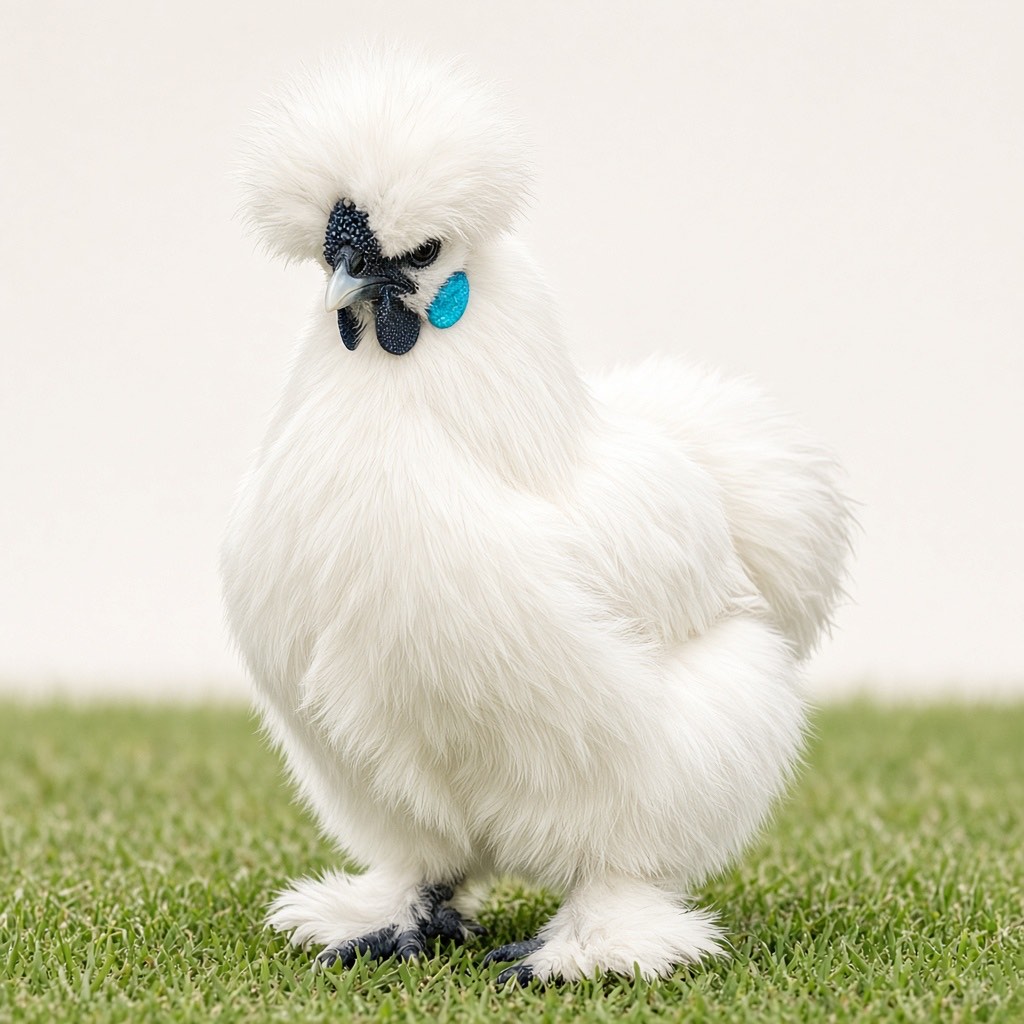
A pure white Silkie chicken with fluffy fur-like plumage and turquoise earlobes standing on grass

Silkie

China

The plumage lacks the barbs that hold normal feathers together, so it feels like fur and cannot repel water. Under all that fluff the skin, bones and meat are black, and Silkies have five toes instead of four.

  • Eggs a year Around 100
  • Known for Broodiness
  • Size Bantam
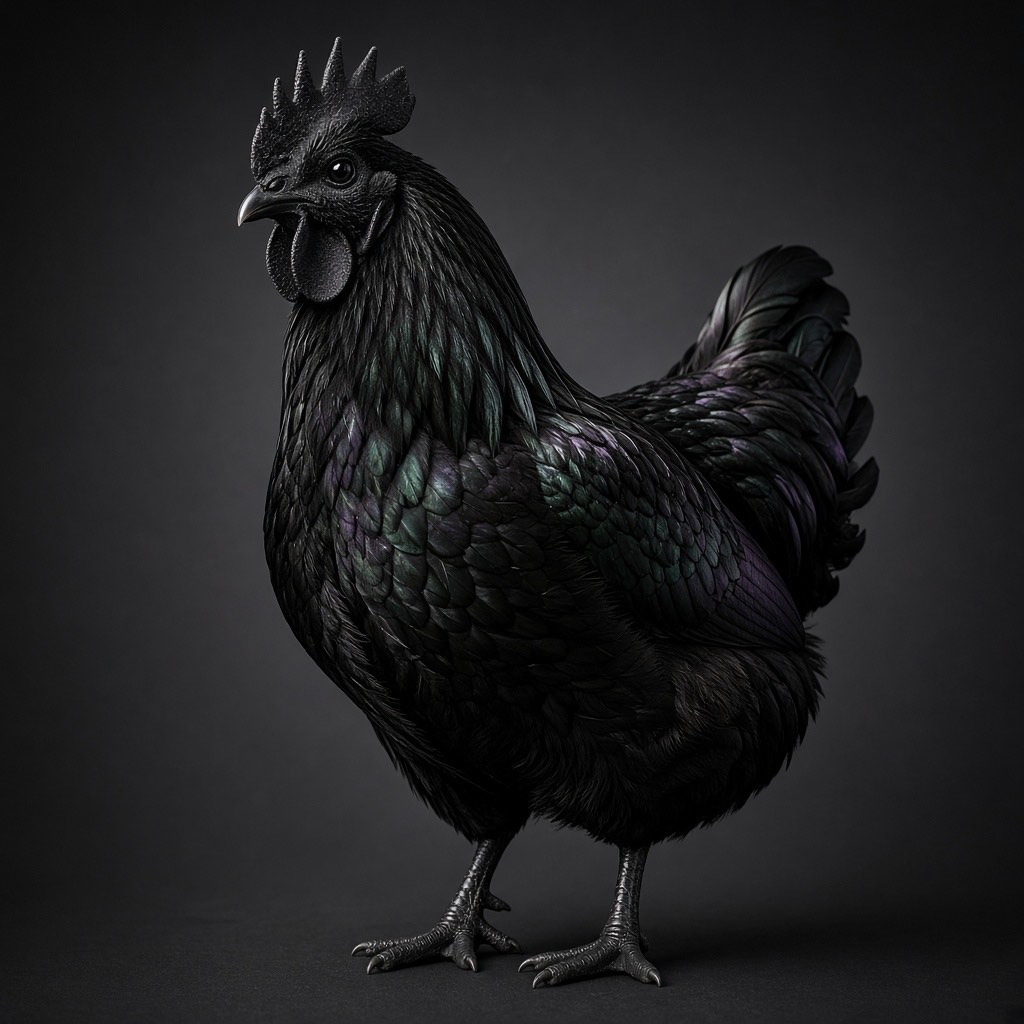
An Ayam Cemani chicken with entirely jet black feathers, comb and legs against a dark background

Ayam Cemani

Indonesia

A genetic condition called fibromelanosis floods the tissue with pigment, turning feathers, comb, tongue, bones and organs black. In Javanese tradition the birds carry ceremonial significance, and chicks can fetch four-figure sums.

  • Eggs a year Around 80
  • Known for Total melanism
  • Size Standard
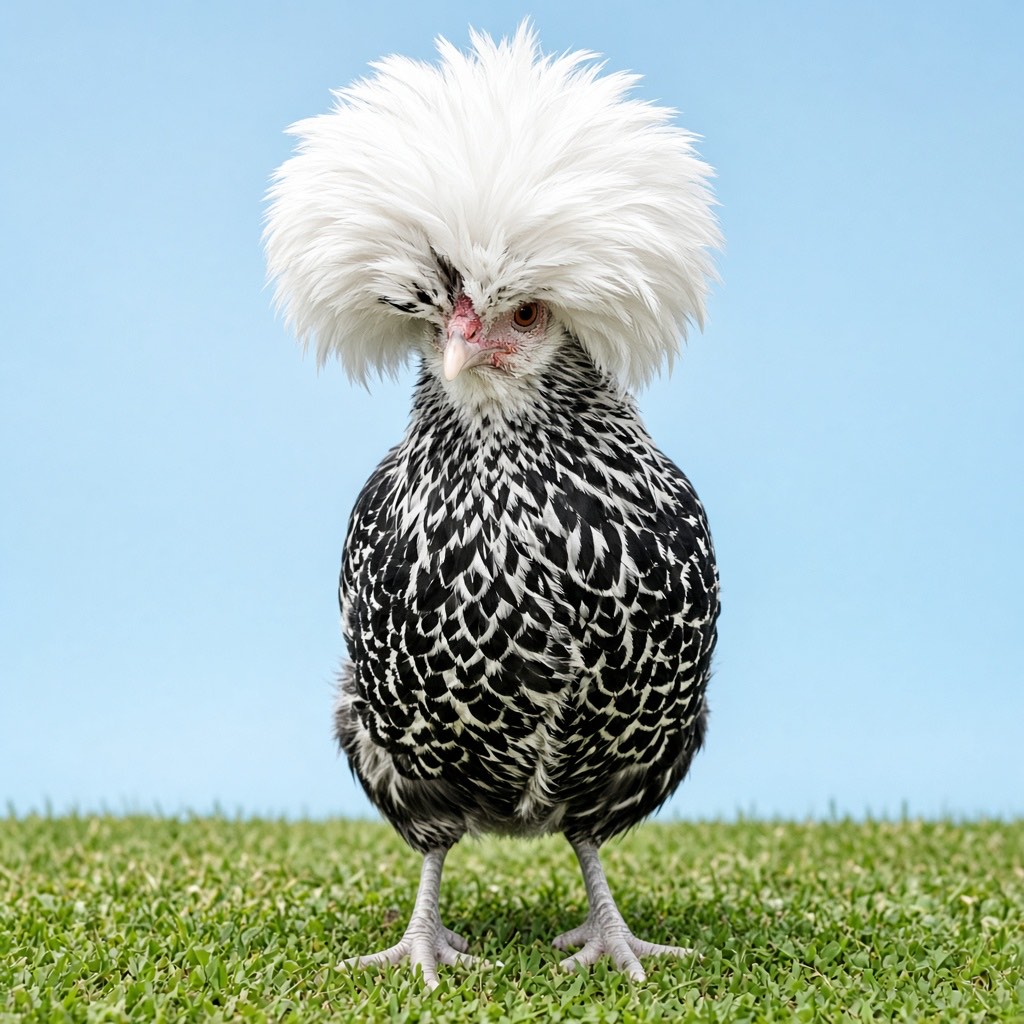
A Polish chicken with an enormous white feather crest covering its head, on grass against a blue background

Polish

Netherlands

The crest sits on a small dome in the skull and grows large enough to block the bird's forward vision, which makes Polish hens famously easy to startle. Despite the name, the breed was developed by Dutch fanciers.

  • Eggs a year Around 200
  • Known for The crest
  • Size Standard
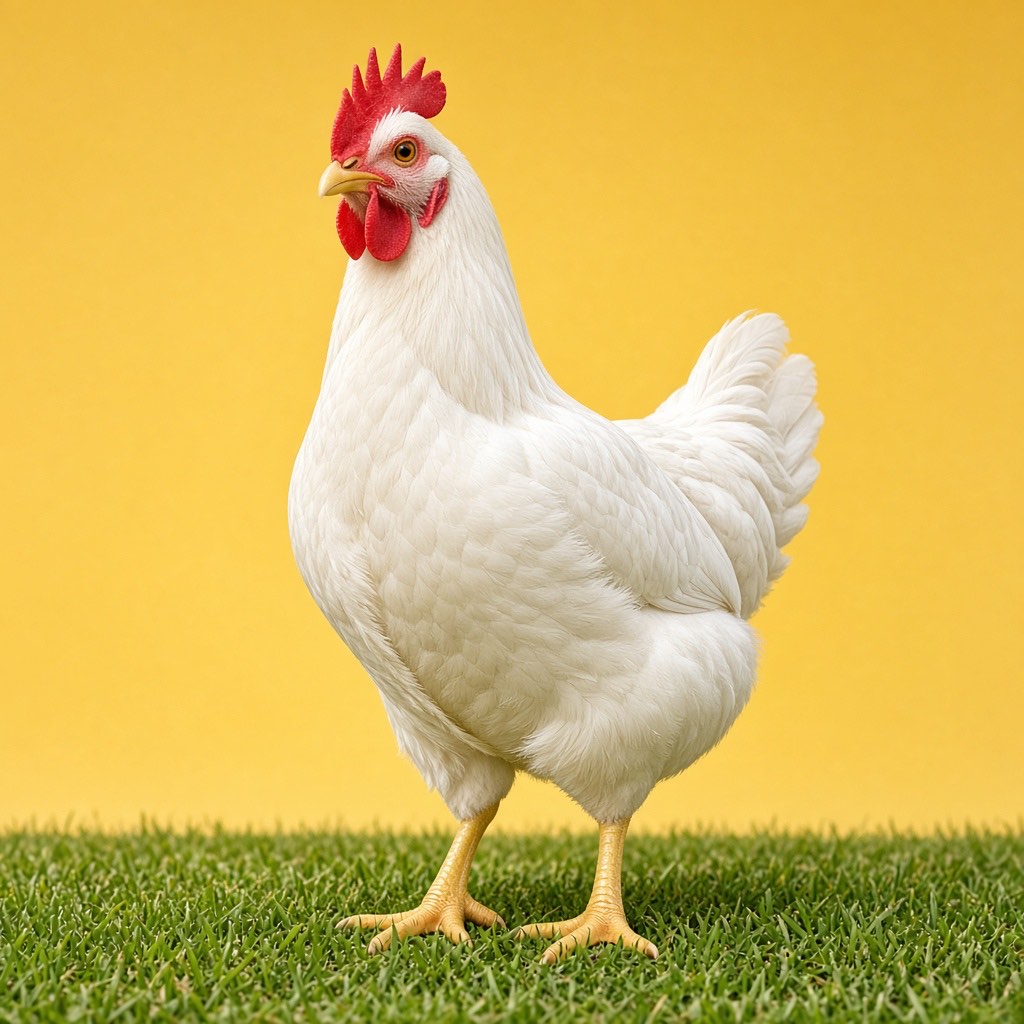
A White Leghorn hen with sleek white plumage and a tall red comb on grass against a yellow background

White Leghorn

Italy

The most productive laying hen ever developed, and the reason supermarket eggs are usually white. Nearly every commercial white egg on Earth traces back to this Tuscan breed. Also the model for a certain cartoon rooster.

  • Eggs a year 280 to 320
  • Known for Output
  • Size Standard

The original

Chicken Road

One hen. One endless neon highway. A single tap to hop forward. Chicken Road takes the oldest joke in comedy and turns it into a test of nerve, because every lane you clear multiplies your score, and the only way to keep those points is to stop while you are still ahead.

  • One-tap controls
  • Four difficulty lanes
  • Daily challenge
  • Plays offline
  • No download
  • Free forever
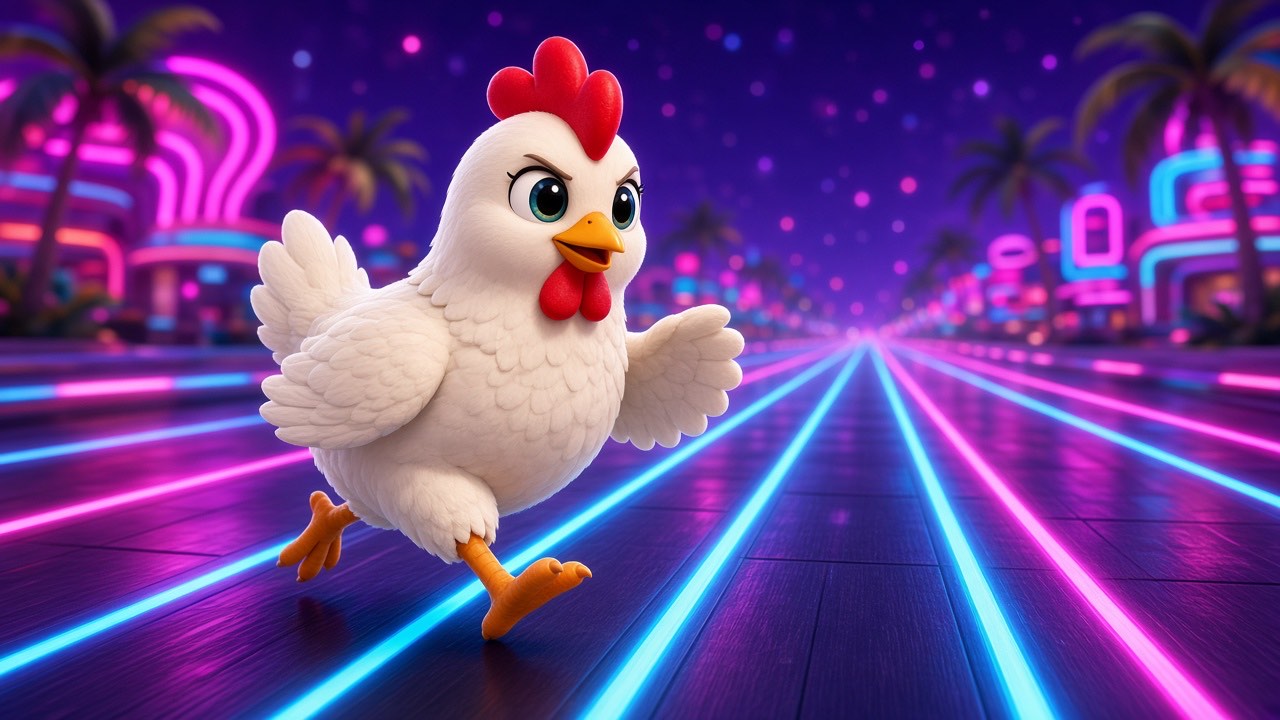
Chicken Road artwork: a cartoon white hen striding across a neon-lit night highway with glowing cyan and magenta lane markings
Chicken Road: cross the lanes, stack the multiplier, know when to stop.

How a run actually works

  1. Choose your lane

    Four difficulty settings change how many hazards spawn and how fast they move. Easy is forgiving and slow to reward. Hardcore pays enormously and rarely lets you finish a sentence.

  2. Tap to hop

    One tap moves your hen one lane forward. There is no steering and no jump button. The entire skill of the game lives in deciding when that single tap happens.

  3. Read the pattern

    Traffic is generated in repeating waves, not at random. Watch two cycles before you commit and you will start to see the safe window open on a beat you can count.

  4. Bank the streak

    Your multiplier climbs with every lane survived and evaporates the moment you get clipped. Banking locks the score into your profile and ends the run on your terms.

Greed is the only real hazard

Most runs do not end because a lane was unfair. They end one lane after the point where the player already knew they should have banked. Pick a target multiplier before you start and hold yourself to it.

Count, do not react

Reacting to what you see puts you a fraction of a second behind the hazard. Counting the rhythm of the wave puts you a fraction ahead. Say the beat out loud if it helps.

Use the daily challenge as practice

The daily run uses a fixed seed, so every player faces the same traffic. It is the only mode where you can rehearse an exact sequence and compare your line against the leaderboard.

The sequel

Chicken Road 2

The sequel keeps the one-tap heart of the original and builds a world around it. The endless highway becomes sixty designed city crossings, the weather starts interfering with your timing, and for the first time a second hen can share the road with you.

  • Two-hen co-op
  • Sixty handmade levels
  • Dynamic weather
  • Boss crossings
  • Coop customisation
  • Cross-device saves
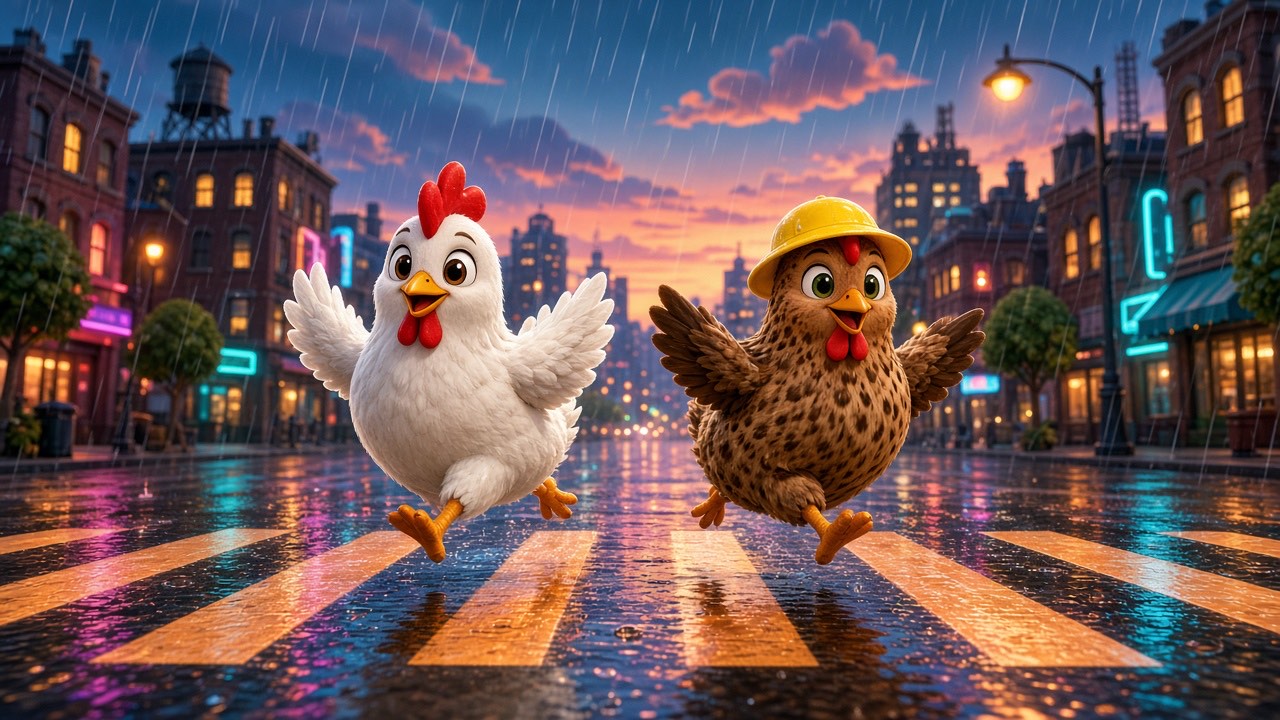
Chicken Road 2 artwork: two cartoon hens, one in a yellow rain hat, hopping across a rain-slicked neon city crosswalk at dusk
Chicken Road 2: same single tap, twice the hens, and weather that lies to you.

What the sequel adds

Two-hen co-op

A second player joins on the same screen or online. Both hens must reach the far kerb for the crossing to count, so the multiplier becomes a negotiation rather than a personal decision.

Weather that changes the maths

Rain lengthens braking distances and stretches the safe window. Fog hides the far lanes until you are committed. Night shifts the whole rhythm of the traffic. The pattern you memorised no longer applies.

Sixty designed levels

Instead of one procedural highway, the sequel is built as a campaign of hand-authored crossings across six districts, each with its own hazard vocabulary and a three-star completion target.

Boss crossings

Every district closes with a set-piece: a runaway feed truck, a tram junction, a roundabout with no discernible logic. These are the only crossings with a fixed solution, and finding it is the point.

Customise the coop

Stars spend on hats, feather patterns and coop decorations. All of it is cosmetic and all of it is earned by playing. There is nothing to buy and no currency to top up.

Progress that follows you

Stars, unlocks and best times sync across devices, so a level you three starred on a phone at lunch is still three starred on a laptop that evening.

Which one should you start with?

Chicken Road

  • StructureEndless procedural highway
  • LevelsNone, one continuous run
  • PlayersSolo
  • DifficultyFour selectable lanes
  • SessionThirty seconds to a few minutes
  • GoalHighest banked multiplier
  • Best forShort bursts and leaderboard chasing

Chicken Road 2

  • StructureCampaign across six districts
  • LevelsSixty, plus six boss crossings
  • PlayersSolo or two-hen co-op
  • DifficultyCurve set by level design
  • SessionFive to twenty minutes
  • GoalThree stars on every crossing
  • Best forLonger sittings and playing with someone

Field guide

A short phrasebook for talking to chickens

Spend a week near a flock and the noise resolves into vocabulary. These five calls are the ones you will hear first.

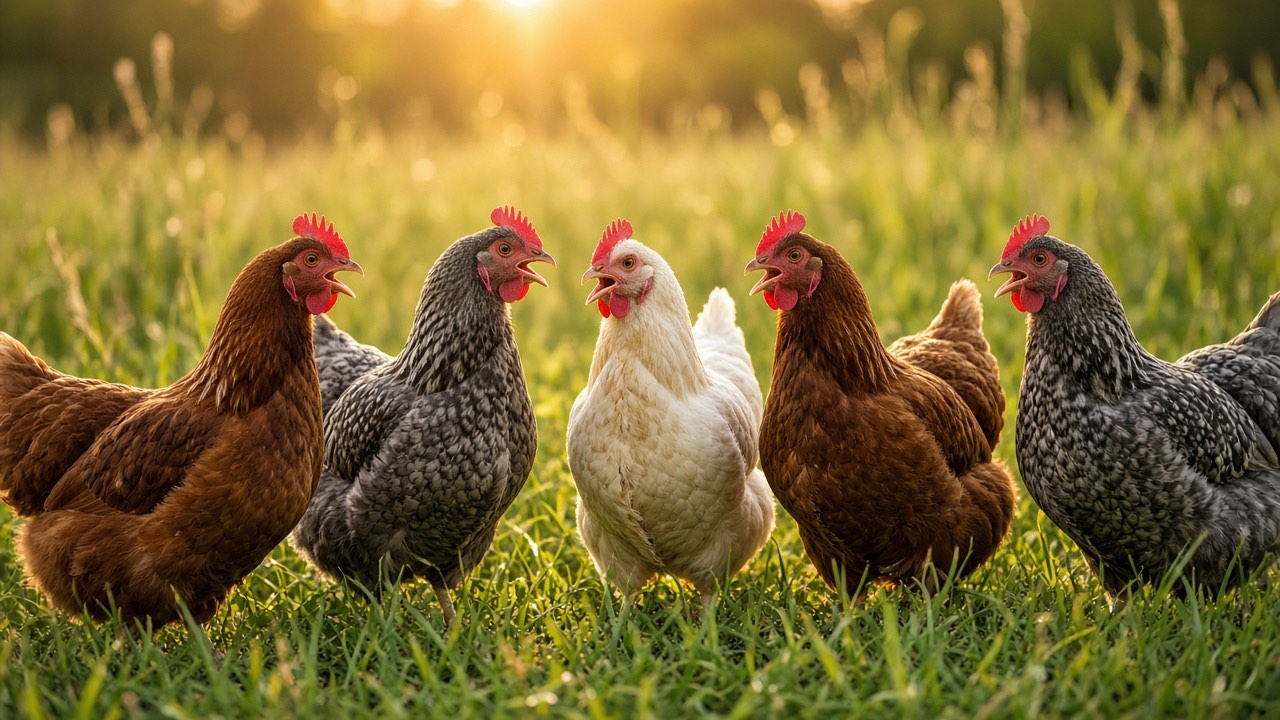
Five mixed-breed hens standing close together on grass in golden evening light, beaks open as if talking
Buk-buk-buk-BA-GAWK
The egg song, delivered at volume immediately after laying and often taken up by the rest of the flock. Nobody is entirely sure why a bird would advertise a fresh egg quite so loudly.
Took-took-took
The food call. A rooster who finds something good will make this sound while picking the item up and dropping it repeatedly until the hens come to look. Mother hens use it to teach chicks what is edible.
A single shrill raaak
Aerial predator. One long scream and the entire flock freezes flat, scanning upward. This call is reserved for hawks and drones and is acoustically hard to locate, which protects the caller.
Kut-kut-kut-kut
Ground predator. Short, staccato, repeated, and it produces the opposite response: heads up, bodies tall, everyone moving toward cover rather than flattening.
A low rolling purr
Contentment. Heard from dust-bathing hens and from a broody mother settling over her clutch. If a chicken purrs at you, you have been accepted into the flock.

From jungle to everywhere

How a shy forest bird conquered the planet

The domestic chicken is the most successful bird in history, and the story starts with an animal that preferred to stay hidden in the undergrowth.

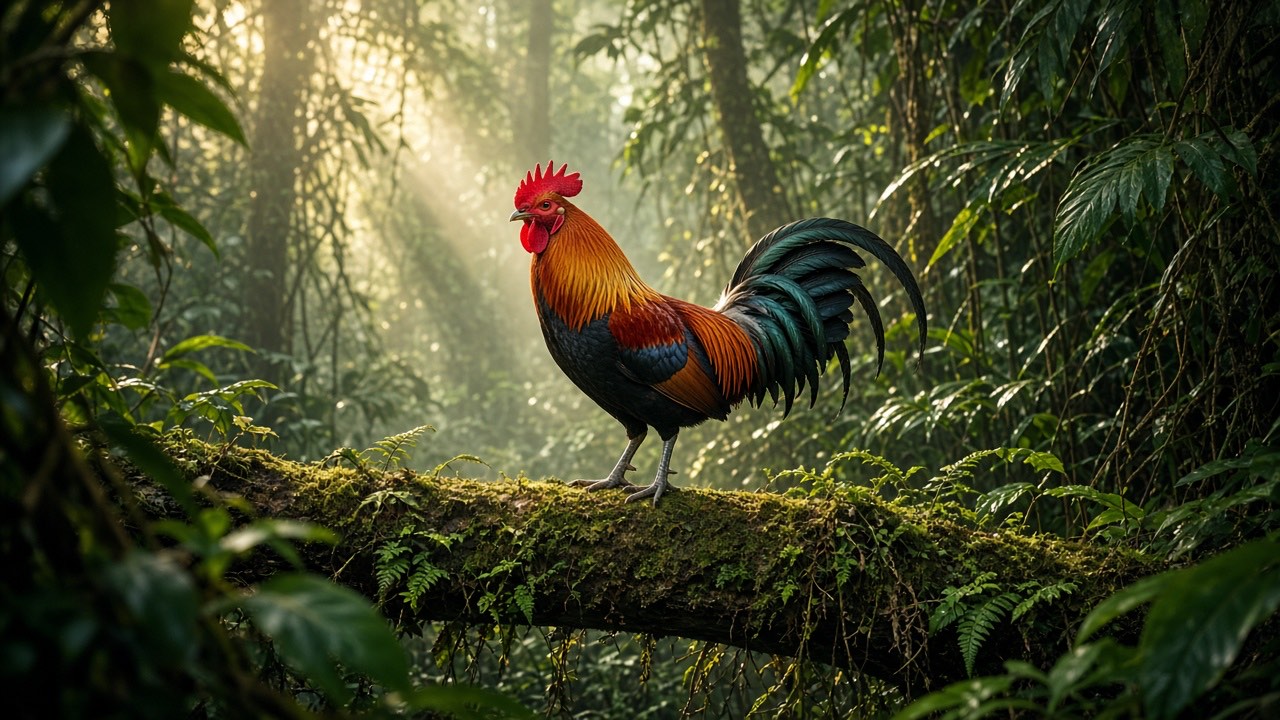
A wild red junglefowl with fiery orange neck feathers perched on a mossy log in a misty rainforest
  1. The ancestor

    Red junglefowl in the forests of Southeast Asia

    Gallus gallus lived in the undergrowth, laying a handful of eggs a year and roosting in trees at night. Every chicken alive descends mainly from this bird, with some genetic contribution from its grey and Ceylon relatives.

  2. Around 1500 BC

    Rice farming makes domestication possible

    Recent excavations point to dry rice cultivation as the trigger. Grain spilled at the forest edge drew junglefowl out of cover and into permanent contact with people, and the relationship stuck.

  3. First millennium BC

    Sacred birds, not supper

    Chickens spread west as exotic and ritually important animals. Roman commanders kept sacred flocks and read omens from how eagerly the birds fed before a battle. One admiral threw his overboard for refusing to eat, and lost.

  4. 1840s

    Hen fever grips the Victorians

    Queen Victoria received a gift of Cochin fowl and Britain lost its mind. A speculative craze in ornamental breeds drove prices to absurd heights, and the exhibition standards written during the mania created most of the breeds we recognise today.

  5. 1948

    The Chicken of Tomorrow contest

    A US competition to breed a better meat bird reshaped global agriculture within a generation. The winning genetics became the foundation of the modern broiler, and chicken went from occasional treat to the world's default meat.

  6. Today

    Twenty-six billion and counting

    There are now roughly three chickens for every person alive. Their bones are so abundant in the ground that geologists have proposed the broiler chicken as a signature fossil of the Anthropocene.

Questions

Frequently asked questions

One email a month

Get the strangest chicken fact we found this month

Plus patch notes when a new district lands in Chicken Road 2. One message a month, no partners, unsubscribe in a click.

We store your address only to send this newsletter. See the privacy policy.